
Drone Performance: to be Presented to Cathedral City Council on Wednesday

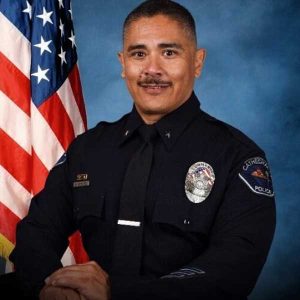
Acting Police Chief Rick Sanchez
CATHEDRAL CITY — There are approximately 1,400 police departments in the United States using drones, and the Cathedral City Police Department is one of the. In operation less than a year, the department’s leadership is already touting its performance.
Acting Police Chief Rick Sanchez is expected to present a report to the City Council at it study session at 3 p.m. Wednesday.
In 2025, the Police Department initiated the Drone as First Responder (DFR) Program to enhance emergency response capabilities, improve situational awareness, and increase officer and community safety. The program deploys unmanned aerial systems (UAS) to priority calls for service prior to or simultaneously with ground units. It is widely viewed as a force multiplier.
The DFR program was established utilizing state and regional grant money, including Supplemental Law Enforcement Services Account (SLESA) and Coachella Valley Association of Governments (CVAG) funding. The program was implemented in compliance with Federal Aviation Administration (FAA) regulations and City policy, including publicly adopted UAS guidelines governing privacy, data retention, and operational deployment.
The program objectives include:
- Reducing response times to critical incidents
- Enhancing officer safety through real-time aerial intelligence
- Improving decision-making through live situational awareness
- Increasing operational efficiency and resource deployment
Acting Police Chief Rick Sanchez
“Since its implementation, the DFR program has demonstrated measurable operational benefits,” “Acting Police Chief Rick Sanchez writes in a staff report for the City Council. “Drones are deployed to calls including violent crimes in progress, suspicious persons, traffic collisions, perimeter containment situations, and search operations.” Sanchez writes,
Drones frequently arrive on scene ahead of patrol units, providing live intelligence that informs tactical decision-making and enhances officer safety. In several instances, aerial assessment has determined patrol resources were not required, allowing units to remain
available for higher-priority calls.
Aerial video documentation has supported investigative follow-up and provided objective incident documentation. The Department continues to operate under established UAS policies, conducts public outreach, and ensures accountability through supervisory oversight and flight logging procedures.
Beyond law enforcement response, the DFR program has enhanced overall public safety throughout the city. Drones have assisted the Fire Department during fires, traffic collisions, and search and rescue operations, according to Sanchez. They have also supported the Public Works Department by documenting water and mud flow, assessing storm-related damage, and helping evaluate infrastructure impacts following significant weather events. This collaboration improves both immediate response and long-term planning efforts.
“As far as Drone successes, we have three drones strategically placed throughout the city to give us approximately 90% coverage of the inhabited parts of the city to give us approximately 90% coverage of the inhabited parts of the city,” Commander Andrew Diaz told Uken Report. “This means that (among) the three drones, they can independently fly to any neighborhood, from the extreme south end in the cove, up to the Rio Vista neighborhood for priority calls for service.
The department also has one trunk deployable drone which officers can drive to and directly launch from any location in the city, which includes the desert areas to the north, Diaz said, “We have flown almost 400 missions between the three docked drones from September 2025 until March 2026.”
The maiden flight of the first docked drone, call-sign Falcon 1, was Sept. 9th, 2025.
To ensure professionalism and compliance, we have made a significant investment in training, according to Sanchez. Six staff members recently passed the FAA Part 107 Certification testing followed by completing a rigorous 40-hour training program to become certified drone pilots, bringing the department’s total to nine trained personnel. The team includes both sworn officers and professional civilian staff.
“This diverse and highly trained group ensures that the program operates safely, responsibly, and in full compliance with federal aviation regulations and departmental pol” Sanchez writes in his report.
Future objectives include expanding pilot staffing, evaluating additional launch sites to improve coverage, and continuing data-driven evaluation of response metrics and safety outcomes.
Image Sources
- 2026-Drone-3-800×568 (1): CCPD