Mercy Air 29, Marine Corps Air Ground Combat Center Celebrate 20 Years of Lifesaving Partnership
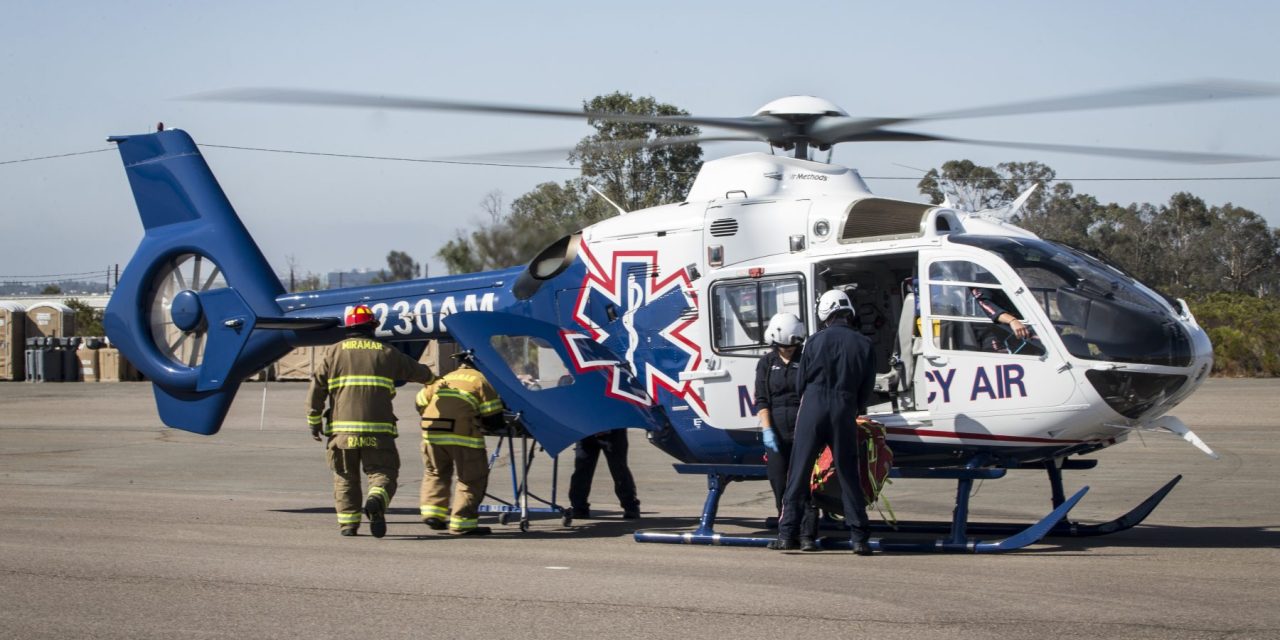
TWENTYNINE PALMS — Mercy Air 29, part of the Mercy Air emergency air ambulance ecosystem owned and operated by Air Methods, commemorates 20 years of partnership with the Marine Corps Air Ground Combat Center (MCAGCC), also known as Twentynine Palms. Since its inception, this collaboration has played an essential role in safeguarding service members, base personnel, and the surrounding community through dedicated, full‑time MEDEVAC support.
The partnership was established after a comprehensive cost analysis determined that contracting a dedicated air medical resource would be more cost-effective than maintaining military-owned aircraft for these missions. Two decades later, the value of that decision is evident on training ranges across the expansive Mojave Desert terrain and within nearby communities.
The unique terrain and remote location—spanning nearly 1,200 square miles—make MCAGCC the Marine Corps’ premier training ground and Mercy Air 29 a key enabler of that mission. The presence of a dedicated MEDEVAC aircraft with Advanced Life Support (ALS) capabilities ensures a rapid, lifesaving response. The ability to bring ALS directly to incident sites and transport patients immediately to trauma-appropriate facilities continues to make a significant difference in patient outcomes.
“Every minute counts in an emergency,” said Eric Stone, Mercy Air 29 flight nurse and clinical base lead. “Our long-standing partnership with MCAGCC ensures that Marines, Sailors, Allied Forces, and civilian personnel receive world-class trauma and critical care services when it matters most.”
Mercy Air 29 is integral to MCAGCC’s Unit Level Training (ULT) and Service Level Training (SLT) requirements. The MCAGCC hosts multiple SLT Exercises each year, preparing thousands of Marines and joint forces annually for real-world crises and combat operations.
“One of the reasons MCAGCC can execute training on this scale is because we can assure commanders that emergency medical support is ready, available, and capable,” said Captain Johnathon Huizar, MCAGCC Director of Communication Strategy and Operations.
The collaboration extends far beyond on-base emergencies. If needed, community first responders can call upon Mercy Air 29 to support urgent incidents in town. Mercy Air’s dispatch team coordinates closely with MCAGCC to bring in additional aircraft when needed, ensuring uninterrupted coverage during military training while still supporting off-base emergencies.
While Mercy Air 29 currently operates a Bell 412 helicopter, the base will be upgrading the aircraft to an Airbus H145 later this year. The base is staffed 24/7/365 for emergency medical transport, ICU-level transfers, and trauma scene responses. Crews are equipped with lifesaving resources such as blood products, AutoPulse automated CPR, and advanced airway management equipment.
For two decades, Mercy Air 29 has stood as a dedicated partner to MCAGCC, providing the critical air medical support that enables Marines and joint forces to train at the highest level. Throughout the long-standing collaboration, Mercy Air 29 has ensured that every exercise, mission, and operation is backed by the highest standard of emergency medical response, delivering lifesaving critical care to service members, base personnel, and community members when needed most.
“We are honored to celebrate this milestone,” said Stone. “Our mission has always been to provide rapid, top-tier medical intervention that saves lives. Standing shoulder-to-shoulder with MCAGCC for 20 years has allowed us to do exactly that.”
Image Sources
- : Air Methods, LLC