Desert Hot Springs City Council Chooses Not to Use CVAG to Address Homelessness
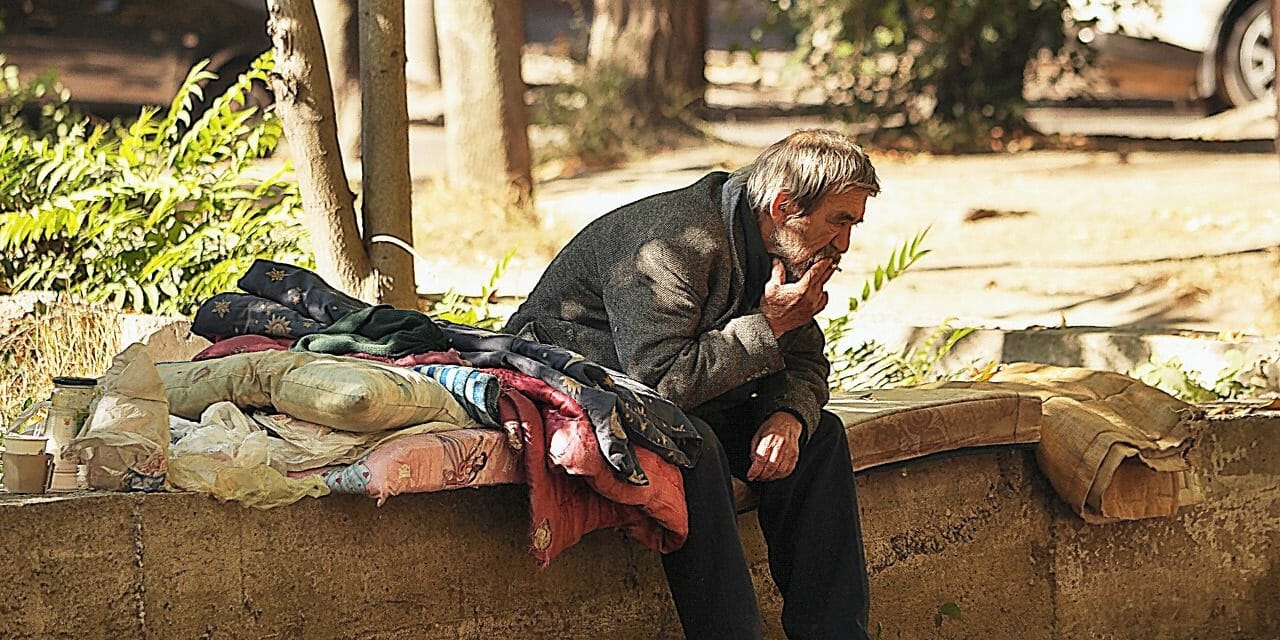
DESERT HOT SPRINGS — Saying it’s all about watching how to best spend taxpayer dollars on homelessness, the City Council has chosen to continue the current SWAG/CRT model: Maintain the existing approach to homelessness services and policy.
Social Work Action Group (SWAG) is an organization that helps homeless people off the street, according to its website. Since 2017, the group has helped more than 3,100 homeless people get off the street. According to their data, it takes an average of 13 visits to convince the same homeless individual to take the next step out of homelessness.
Under this option, the city will not participate in the CVAG CV-200 program or the partnership with Riverside County, CVAG, and the Coachella Valley Conservation Commission (CVCC) on the Encampment Resolution Funding (ERF) Program. The ERF is a ompetitive grant program available to assist local jurisdictions to provide services and supports to people experiencing homelessness in encampments that results in meaningful paths to safe and stable housing. Eligible applicants include counties, Continuums of Care, and cities of any size.
“We also did not participate with CVAG last year,” Councilmember Jan Pye told Uken Report. “Based on the data received and its effect on our community, I have no concerns regarding CVAG. The main focus of our attention lies with the outcomes we are observing from SWAG. … It is essential that we obtain strong, positive results for our community. Through ongoing discussions—particularly those centered around available resources we have the opportunity to further elaborate on and determine what strategies and actions are best suited for our benefit.”
At present, cost remains a critical factor in our decision-making process. Given these considerations, Pye said. “I have chosen the option that yields the best results for our community.”
Council member Daniel Pitts also supported retaining the SWAG/CRT option.
“Our city manager and staff presented an excellent PowerPoint highlighting both the data demonstrating the program’s success and powerful before-and-after stories from SWAG recipients,” Pitts said. “In fact, I publicly stated, ‘We shouldn’t change what’s already working for our city. SWAG is working.’– ”
Mayor Pro Tem Gary Gardner said that he, too, supported SWAG over CVAG because “SWAG is both more successful at getting people off the streets and into permanent housing, and is more cost effective than the ‘Housing First’ program that is coordinated by CVAG. The numbers speak for themselves, as noted by the staff report, which is very detailed and comprehensive.
These stats are from the staff report:
- 66 individuals successfully exited the street into treatment, housing, or stabilization programs, a 76.74% success rate.
- 25 individuals have returned to the street, a significant improvement over previous retention outcome results.
- 45 individuals have remained successfully exited from street homelessness, a 53.32% success rate.
- This far exceeds the 18 individuals housed during the first year under the Housing First Model which produced an 8.58% success rate in our city.
The CRT team made 191 arrests related to criminal activity: 67 felonies and 124
“So,” Gardner said. “we are spending less and getting a better outcome for our city, our residents and our unhoused population.”
The homeless issue of today took root on Sept. 30, 2024, the city had exhausted the Homeless Housing, Assistance, and Prevention under its previous agreement and, on
Oct. 1, 2024, entered into a Professional Services Agreement with SWAG, This transition marked a strategic shift away from the Housing First model toward a treatment and accountability-based model focused on rehabilitation, recovery, and personal responsibility, Doria Willms wrote in her staff report.
SWAG’s approach emphasizes relationship building, trust, and direct connections to detox and mental health facilities for chronically unhoused individuals, with the goal being reunification with the familial unit. “This immediate intervention and placement model has eliminated the need for The HUB to operate as an overnight facility. Under SWAG’s approach, overnight stays were anticipated only in instances where an individual successfully completed detox but was unable to secure housing or reunification” Wils writes in the report.
To date, no overnight stays have been required under this model. The HUB now functions as a structured point of facilitation for meaningful, direct services rather than a shelter, with participants actively engaging in programs designed to address the root causes of homelessness. The initial agreement with SWAG anticipated 24/7 operations at The HUB and included funding for five (5) full-time employees (FTEs) assigned to the facility, as well as four (4) full-time Street Outreach Managers, for a total contract amount of $1,072,668. In May 2025, the city determined that SWAG’s operational model, directly connecting unhoused individuals to detoxification and mental health services, no longer necessitated continuous on-site staffing, as no overnight stays had occurred at
The HUB since the start of the contract.
Accordingly, city staff renegotiated the agreement with SWAG to remove the five (5) FTE facility positions while retaining the four (4) full-time Street Outreach Managers, resulting in a contract reduction and savings of more than $400,000
Mayor Scott Matas said there was no other reason for supporting the homelessness option with SWAG other than what was presented at the meeting and the “overwhelming success of our current program.”
Councilmember Dirk Voss was ill and did not attend the meeting,
Image Sources
- homeless-2527051_1280: Shutterstock