
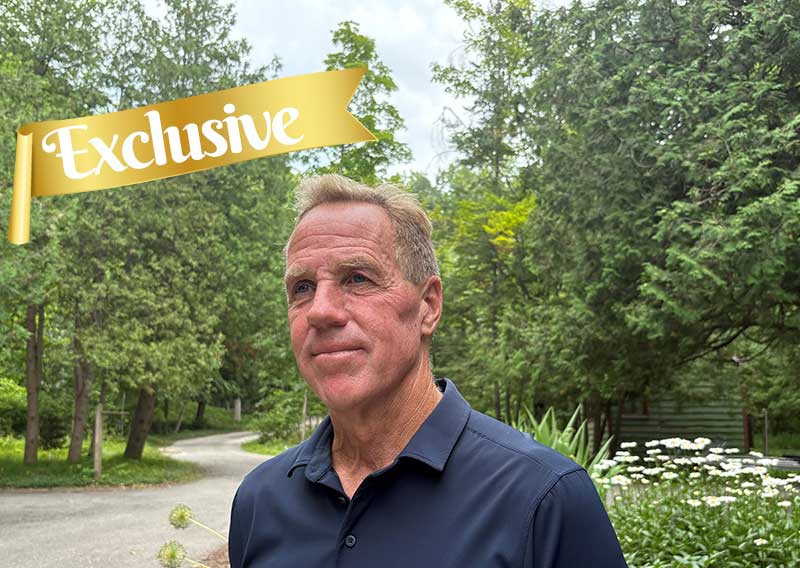
In Exclusive Interview with Uken Report, Steve Pougnet for First Time Addresses Charges Leveled Against Him
PALM SPRINGS —For the past 10 years, former Mayor Steve Pougnet has been hounded, harassed and hunted for sound bites and photos of him at the lowest point of his life. He remained silent for an entire decade. Until now.
Today, in an exclusive interview with Uken Report, Pougnet, 62, lays bare his thoughts and actions. There were no rules, restrictions or payments for the one-on-one interview; no question was off the table.
As background, Pougnet was elected mayor of Palm Springs in 2007. served as the mayor of Palm Springs from 2007 to 2015. In a field of five candidates, he came in first with nearly 71% of the vote, according to the Riverside County Registrar of voters. In November 2011, he came in first place again, in a field of seven candidates with more than 69% of the vote, according to the Registrar’s office.
Pougnet also served four years on the City Council prior to becoming mayor.
He was popular, charismatic, and committed to Palm Springs and getting things done. Many of the city’s power brokers jockeyed to be in his orbit. He had become a darling of the city.
The mayor was credited with creating and launching Palm Springs’ Hotel Incentive Program, which resulted in more than 1,000 jobs, $150 million in economic investment, and 1,600 new hotel rooms. Also notable is the City Council’s adoption of the City’s Sustainability Master Plan which includes a report card to ensure that it is an actionable blueprint for making Palm Springs greener and more energy efficient.
Pougnet served on numerous boards and commissions; his leadership style is one of collaboration, open and frank dialogue, with a goal of maintaining and building upon what’s already a world-class destination and a great place to live and do business.
A member of the Democratic Party and openly gay, Pougnet soon was bringing people from all walks of life —gay, straight, black, white, brown, Republicans, Democrats– and, lest we forget —disadvantaged children whom he invited to the Palm Springs International Film Festival. He ensured they were seated at a head table usually reserved for city staff. He led the city through the Great Depression.
Then, boom.
Seemingly out of nowhere the beloved mayor was making headlines for alleged felony corruption and bribery.
What?!
Those charges took Pougnet on a 10-year odyssey through the Riverside County Justice System that would land him on evening news and in newspaper headlines t hat were foreign to him and his loyal followers.
He remained silent and hired an attorney, Malcolm Segal.
Trial dates were repeatedly set and delayed. COVID-19 further delayed the local drama. Things were moving at a snail’s pace, if at all.
While he remained silent, others were filling in the blanks, often with inaccurate information, he said.
Then, boom.
In May, Pougnet pleaded guilty to more than 20 felonies, including bribery, conflict of interest and conspiracy after prosecutors alleged he received more than $200,000 in fake consulting payments from developers, Richard Meaney and John Wessman. He pleaded “no contest“ to the three perjury charges. The alleged payments were reportedly for supporting projects like the Desert Fashion Plaza Redevelopment and Kimpton Rowan Hotel.
Pougnet was sentenced to two years of probation and ordered to pay $325,000 in restitution. He will pay it off over time from “my income sources,” Pougnet said, not the dividend he receives from the city as some news outlets reported.
“I was well-prepared and able to try the case if Steve wanted to do so but he chose instead to accept a carefully considered, thoughtful and fair pre-trial sentencing indication from the Judge,” Segal told Uken Report. “I have every reason to believe he will be successful on probation and comply with all of the rules and requirements”
Pougnet, his husband and two college-age children now live in Northern Michigan in the Traverse City area. He was born in Michigan and wanted to be back near family. He will serve probation from there.
Those are the facts in broad strokes. Now, after a decade, Pougnet will take it from here in a recorded transcript.
Steve Pougnet: Well, because one, I’ve always trusted you and your reporting, right? I’m not saying that means it’s got to be pro Steve or against Steve or whatever, but you’ve always been very fair since the moment that we locked eyes in the editorial board meeting when you realized I was that person who returned the wedding questionnaire as husband and husband and not husband and wife during that. So that’s the reason I agreed to. I don’t feel as if The Desert Sun or the media has treated me as fairly as you. And I just figured that I would do an interview with you because I know whatever comes out will be fair and balanced.
UR: I appreciate your faith in me. All along you said you wanted your case to go to trial and clear your name, but in the end, you took a deal and pleaded guilty to (all the charges listed above.) Why did you take the plea deal?
Steve Pougnet:
Because, Cindy, as you know, this has been delayed. The charges that have been filed were filed almost 8 1/2 years ago. We were ready to go to trial in Indio on May the 1st. When we got to Indio on May the 1st, it was clear that there would not be a courtroom in Indio nor would there probably ever be a courtroom in Indio. At that point, there’s the option of trying to continue it again, which has been so many times for so many years. Or do we try to move forward somewhere else? And John Wessman, he definitely, he’s I think 85 or 86 years old. He was like, “Come on, this has just gone on too long. We need to find another venue,” which I also agreed to.
Too much time had gone by. It’s impacted me and my family for just way too many years. So, it was unfortunate that it was moved out of my back yard. Because if you recall, if you go back and check when I was very first charged, the DA somehow got the trial moved to Riverside, and we, and I forget the reason, she didn’t think I liked the publicity. There was something crazy about that. And right away we fought that. I said, “No, I want the trial in Indio in my back yard. That’s where I want to be tried. And it was moved immediately back to Indio. So, my plan was to always have this tried in Indio where people know … people know me, et cetera, and that clearly wasn’t going to be the case. So, it was moved to Banning.
At that point is when my attorney, Malcolm Segal, and I started to talk … the trial would take another four or five, six weeks in a different jurisdiction, 30 miles west of Palm Springs in a community that doesn’t know me and doesn’t know Palm Springs, or I don’t think knows Palm Springs, as well as a jury pool that would include Palm Springs, Rancho Mirage, et cetera. So, we started to talk and once we got into the first day of the courtroom in Banning, and if you go back and listen to the transcripts from the judge, he was very clear that the justice system has failed. He wasn’t taking sides, but the justice system had failed me, the DA’s office has failed the public by having this case go on and on and on. Once we were there is sort of when we started thinking, maybe it is time to see if we could cut a deal …”
If there were to be a mistrial or a hung jury, we’d have to start all over. So, Malcolm and I, just decided, “Listen, I made a big mistake. I’m going to regret that mistake for the rest of my life — going into business with Mr. Meaney.”
Malcolm had a senior attorney who I worked with most of these 8 1/2 years. Of course I worked with Malcolm, but he had a senior attorney I worked with day-to-day. I would interact with her.
She left Malcolm’s firm on March 1st of this year, which was really quite a blow. She joined the Peace Corps. She raised her kids and she wanted to join the Peace Corps, so she did. That was tough because … she was a key part of his team, the main component of his team. So back to your question … I would probably prefer that Malcolm answer any other questions you might have about that.
That’s when we said to the judge, if there’s an opportunity to discuss a deal, would you at least be willing to entertain that prior to the trial starting. And he said, “Yes, I think that’s not a bad idea.” And from that we came up with a plea agreement, which I still don’t regret that we did it even though Mr. Wessman was found not guilty. It was just the timing, the place, it was the right time to admit that I had gone into business with a good friend that didn’t work out and finally move on with my life.
UR: Dd you tell me at one time that some of the witnesses in your case had also died during the tenure year period?
Steve Pougnet: Yeah, Well, George Marantz had passed away. Who else? There could have, but I haven’t looked at that witness list for a long time.
UR: Steve, as you know or may not know, I’m sure you’ve heard about it or read it yourself, that some people on social media wanted you jailed. Were you ever afraid of going to jail?
Steve Pougnet: No. I mean, first I don’t read any of the social media, zero. But I’m sure Mr. (Robert Julian) Stone and his dear (Judy Deertrack) who can’t get enough of this case, of course, probably said they wanted me to go to jail. But no, certainly if that would’ve been a punishment, if it would’ve gone to trial, I would’ve accepted my punishment. But being afraid to go to jail? No. I would’ve done what I needed to do, survived and moved on.
UR: You sound very calm right now. Is that a fair assessment?
Steve Pougnet: Yeah, it is. It is. I have now met with my probation officer here in Michigan. I had to be accepted by the state of Michigan. I was transferred here, and the state of Michigan accepted me, which was good, and understand the rules of probation here in Michigan. That was a big step, not just to finally have that nailed down the do’s and don’ts of what I can and cannot do for two years. And it is what it is. As I said, I made a mistake, and I will live with that the rest of my life. But having the probation started here and understanding the rules, it’s definitely another layer, another weight has been taken off my shoulders because I know what I’m dealing with.
UR: Can you share with me some of what probation means for you?
Steve Pougnet: Yeah, so you certainly can’t leave the country for two years. I think that applies to not just Michigan and California, but any other state. Of course, I’ve been meeting with my probation person regularly in person, any travel out of the state, I have to submit a request and that request goes to my probation case manager, which then needs to be approved by his supervisor, which would allow me to leave the state of Michigan. So that’s the process there. I don’t have any firearms. I’ve never owned a gun, which of course I’m not allowed to, but I don’t. They can do periodic checks of your home to make sure that you don’t have firearms, Those are some of the main components.
UR: Thank you so much for that. Steve, you had such a good thing going. You were the mayor of an international tourist destination. You were popular. Why did you do it and what was going through your mind at the time?
Steve Pougnet: Christopher had accepted a job transfer. It all happened very quickly there in May of 2011, I made it very clear that I needed to work and make a salary more than the mayor’s salary. (In 2011, the mayor’s salary was $39,419.90, according to Transparent California.) That was no secret. It’s just like when I gave my press conference and said that I was going to run for mayor in 2011, I also said, “You’ll be voting for me even though I’ll be commuting from Denver to Palm Springs.” So, I didn’t hide that either, and I still got whatever it was, 70% of the vote, people knowing that I was going to be moving. But I also said to many people in the business community that I needed to work because commuting was going to be incredibly expensive. I had to get an apartment, yada yada, the whole nine yards. I needed to work, and I wanted to stay to finish the job. And the business community, a lot of other people wanted me to stay, to continue to be mayor.
So as you recall, it all worked out. I did. I got a job at the film festival handling some of their fundraising and their marketing, and that was going fine. And six months into it, the film festival decided that they were going to cut my salary in half. Once they did that, that’s when I was like, I clearly wasn’t delighted by that. And that’s when I went back and said, “Hey, I’ve just lost half of the income that I thought I had.” And that’s when Richard Meaney, who was a good friend, and yes, doing projects in Palm Springs, says, “Hey, I’ll bring you on as a consultant, and then we will get into business together.” And at that point, instead of saying, yes, Cindy, I should have said no. But since I had lost half of my income from the film festival, I said yes, and we started our relationship. But knowing that he’s got projects in Palm Springs, many of which I did recuse myself from, I should have thought better and just knew that there was inherent risk of conflicts, and I should have said no.
UR: So, did you ever do any actual work for him?
Steve Pougnet:
I did. I did. So, I met with Rich (Meaney) on a continuous basis and advised him all the time on. He had a lot of projects in, as did Nexus sort of on the economic conditions in the Valley and things like that. I think we met every single time I was in Palm Springs. And so, at one point he was looking at doing concerts under the windmills. That’s something that we were discussing. I was advising him. Actually, he was having some issues on one of his projects with the Historical Site Preservation board. I was trying to help mediate as a consultant how to make that work. He was thinking of the Miggys Cantina, which he spent a lot of money on, which I recused myself from his votes.
UR: I’m sorry, what was that? The what Cantina?
Steve Pougnet:
So, he built the Miggy’s Cantina. It’s an event space down there on South Palm Canyon, not too far from Miro’s. It’s got a big pool. There’s big pool parties in Las Vegas with bands now. Started like 20 years ago. It was a smaller version of that in Palm Springs. So I advised him on actually some of the components of Miggy’s and some of the neighbors who were worried about noise and things like that. He was considering taking that to Coachella. He was considering doing a gay and lesbian hotel. If you look, he sent a letter out, and if I have it, I’ll send it to you. But he sent a letter out when all this hit in May of that year, how we had planned to go into business together, and we were doing all these things. And I mean, it is what it is now. But yes, we were actively working on stuff. There’s not a time we got together that we’re not thinking or talking or strategizing about something.
UR: Okay. Did you ever think you would get caught, and I’m not sure, Steve, if that is the correct word, but did you ever think it would lead to what it led to?
Steve Pougnet:
No. I mean, I remember when there was the raid on City Hall, and then I had to turn over my phone to an agent or something like that. And I remember saying, “Whatever’s happening just seems like (it’s) being blown out of proportion.” But you also had to recall at that time, I didn’t know everything that Rich Meaney was up to, right? I mean, I didn’t know everything that Rich Meaney was up to.
UR: Do you know who or what led the authorities to the whole ordeal?
Steve Pougnet:
I don’t. I know that the big raid on City Hall revealed nothing, right? Zero. Zero. Of course, there’s not one document, nothing. My City Hall iPad was returned in four hours. I mean, there was nothing, all that tumultuous time for the city, which I still regret on September the first, 2015 was a… zero. There was nothing there. And, Cindy, there’s always the people that in Palm Springs that are not going to be supporters, and that’s fine. Everyone’s got their own opinions and things like that. Whoever started looking at my Form 700, which saw Union Abbey, researched Union Abbey, that’s a company that Mr. Meaney had that hadn’t paid some taxes. Whoever those individuals were who started there were the ones who started getting it going. But do I know for sure who those people are? I don’t. No.
UR: And do you even care at this point?
Steve Pougnet:
No, no, no. Because listen, even people who oppose me and oppose the project or opposed, not just this project, but you’ve been around a long time. I mean, heck, we were sued on so many things in 2003, then this, the Fashion Plaza. Those people, Mike McCullough, Mike McCullough, came up with the term CAVE, citizens against virtually everything. Even those folks are in a minority in Palm Springs. I mean, we took this project to the ballot, it got 70% of the vote, right? Not like we’re hiding the project, but regardless, those folks, for whatever reason, believe there shouldn’t be development or growth. Do I ever get angry sometimes? Well, of course I did. But they’re entitled to their opinion too, just like proponents are, right? So going back, and I’m not Donald Trump. I don’t do revenge, any resentment, any of that crap. I mean, it’s just folks had certain reasons for their views at the time, why they didn’t want things and why they do what they do. I’m really not mad at anybody but myself to tell you the truth. I made a terrible mistake / lack of judgement, but it doesn’t define the person I am (as the Desert Sun has tried very hard to do.)
Check back here tomorrow for Part II of the interview with Steve Pougnet. You won’t want to miss it.




![Sheriff & Coroner Now Inseparable [Opinion]](https://ukenreport.com/wp-content/uploads/2026/07/Riverside-County-Administration-Center-440x264.jpg)